


By Joseph Q. Jarvis | Published: 7 June 2026
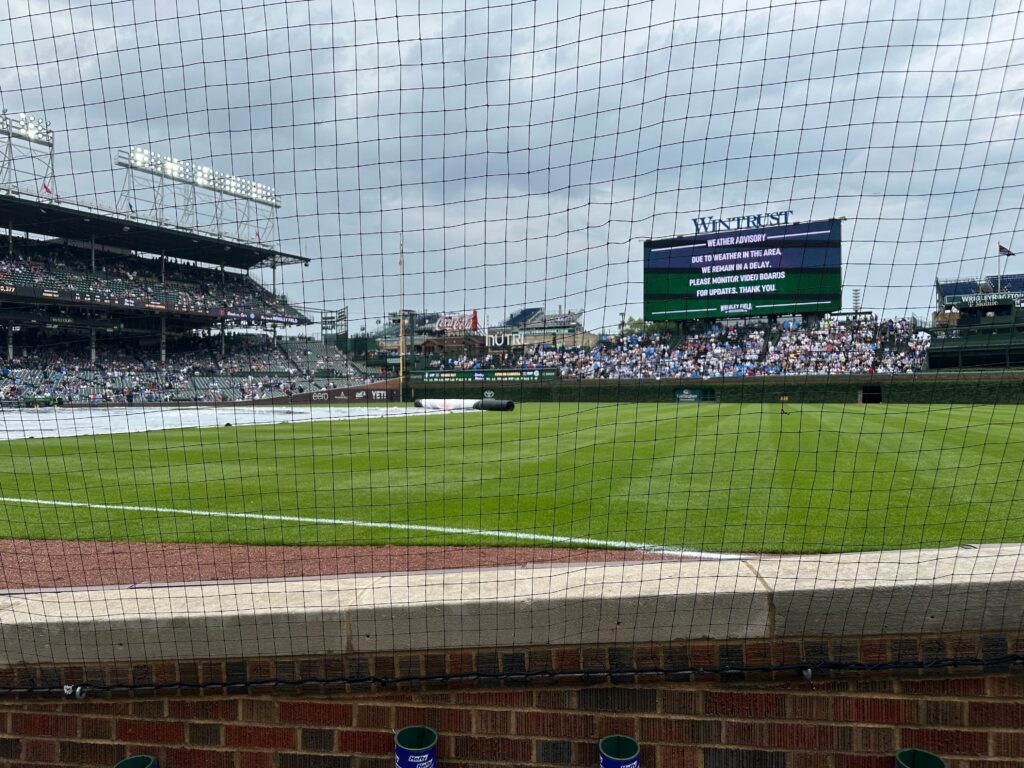
I am a basefall fan. I have followed the San Francisco Giants since childhood when they moved their spring training to Phoenix AZ where I was growing up. These past several years I have tried to watch Giants baseball in person both for home games in SF and on the road, including in Phoenix, San Diego, LA, Denver, Philadelphia, Pittsburgh, and Boston. I had never been to Wrigley Field in Chicago, however, and determined earlier this year to catch a game there June 5-7 while the Giants were in the Windy City. Thus, I found myself waiting out a rain delay on June 5 in Wrigley (see picture below) with my sister and her husband.
The Giants (unlike many games this year) played remarkably well and by the end of the 7th inning were ahead 16-1, so we decided to make an early departure from the game in order to get my sister and her husband on time to the airport for their flight.
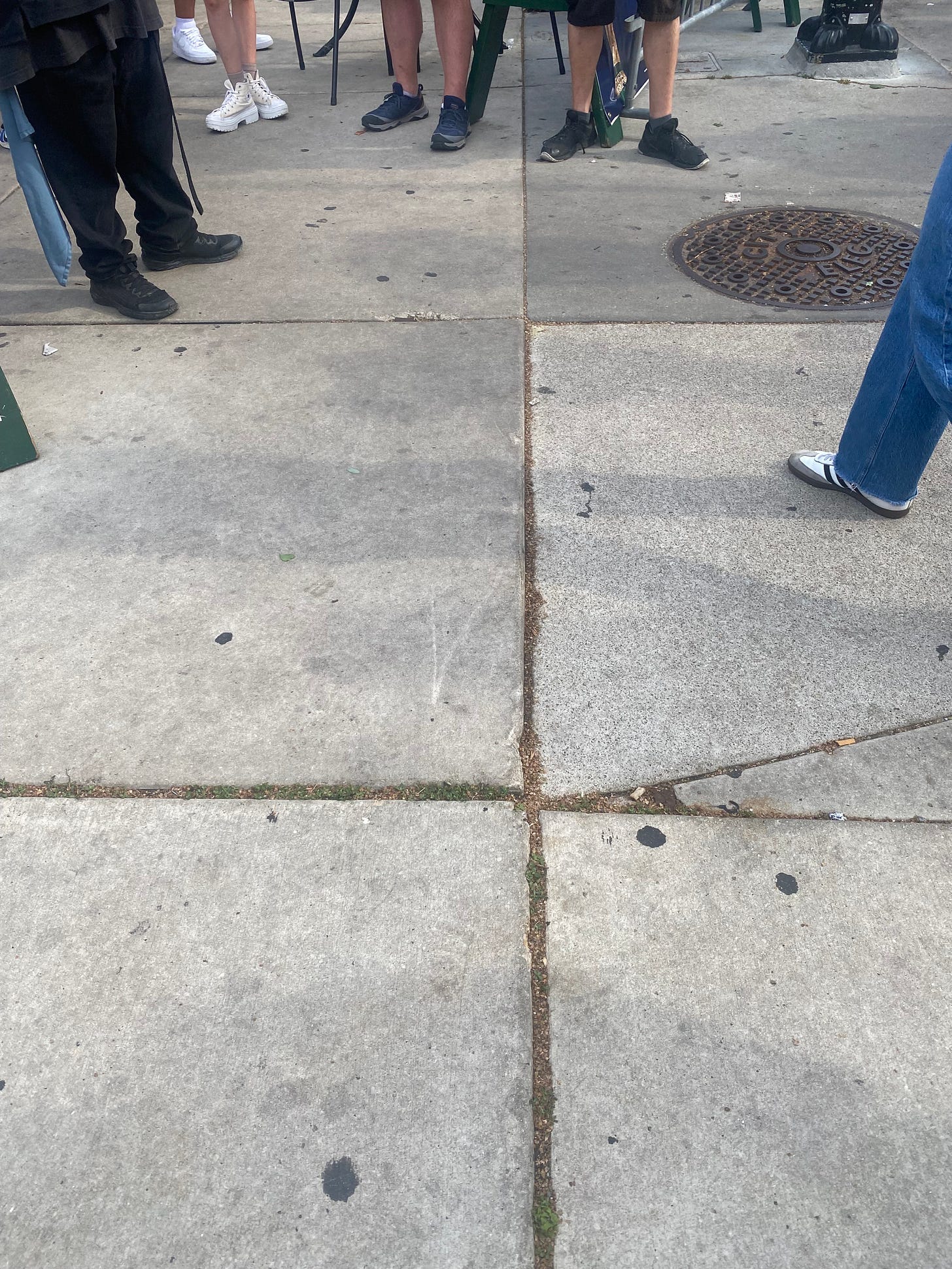
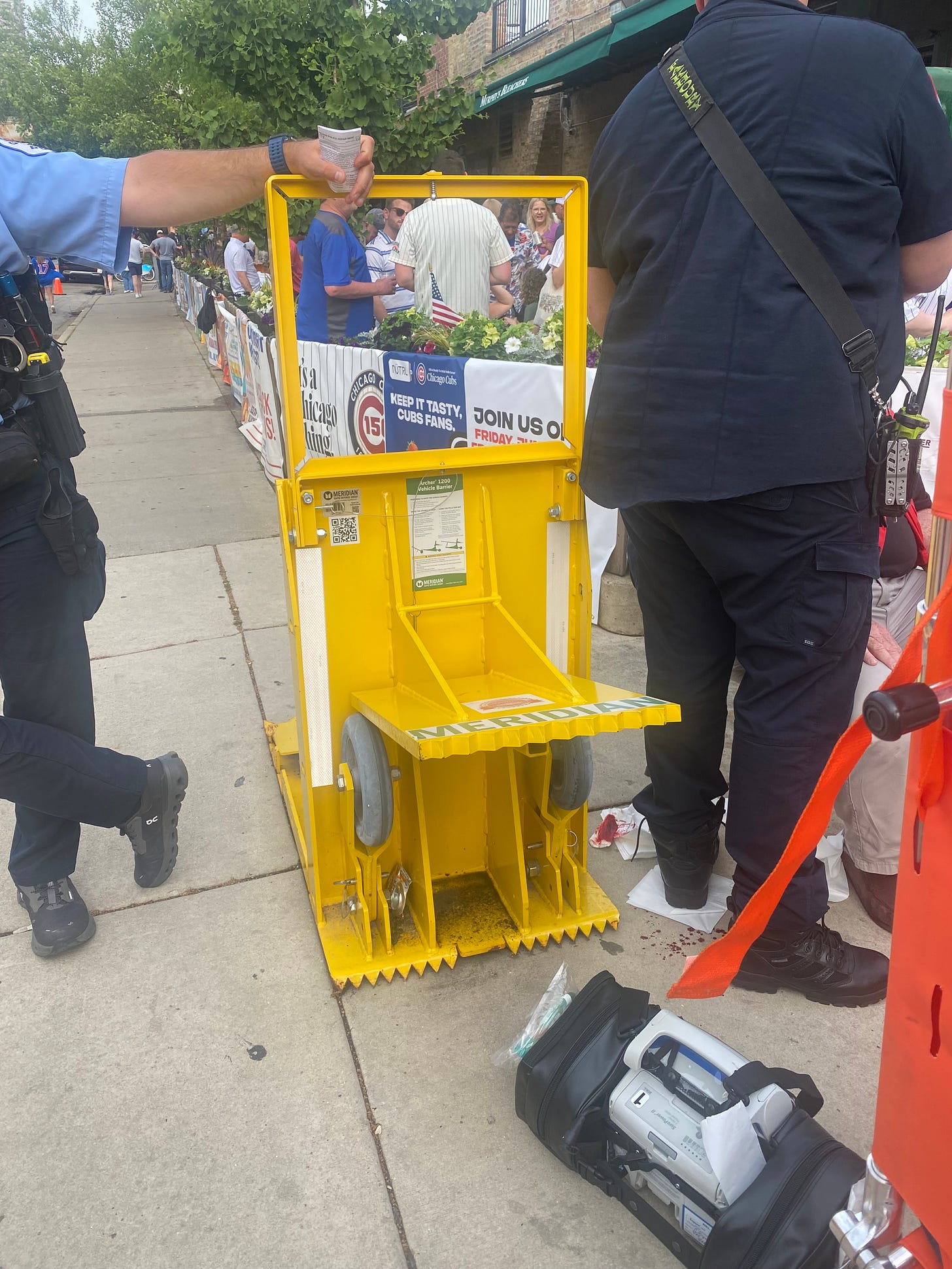
Unfortunately as I hurriedly followed them on the uneven sidewalk across the street from the stadium, I tripped on the edge of an uneven concrete seam (see photo), stumbled forward 10 feet and crashed headfirst into a steel traffic barrier (see photo), then fell to the sidewalk, stunned (I did not lose consciousness).
I received immediate aid from my sister and her husband, but they were assisted by a passerby, who hustled and found me a chair, and applied pressure to my headwound (which was copiously bleeding), staying to help without thought of compensation (see photo of me sitting in the chair).
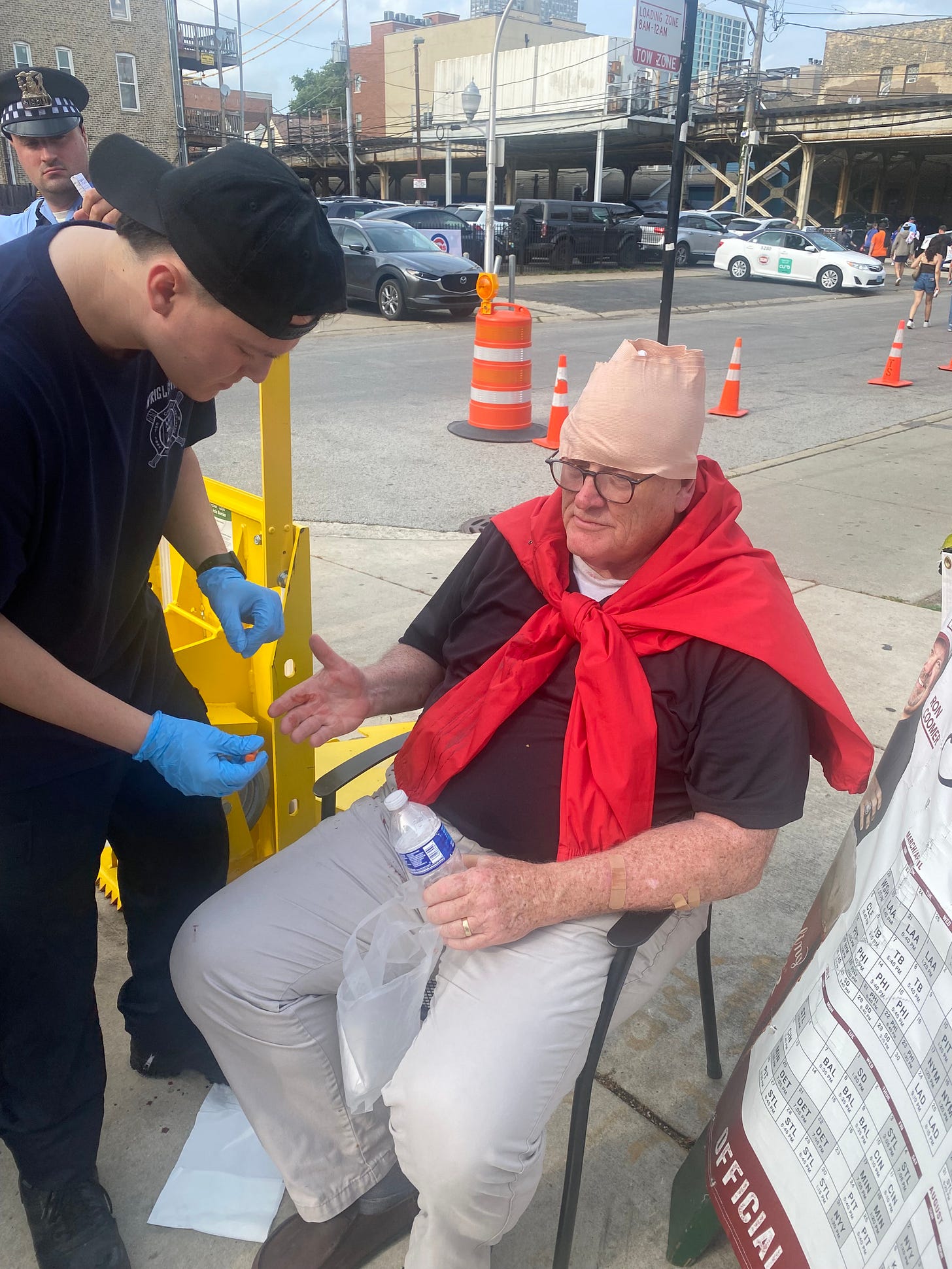
A nearby police officer called for an ambulance, and a paramedic arrived and immediately declared that I would need evaluation in an ER. I had a three inch gash in my scalp and cuts and scrapes on my arms (see photos).
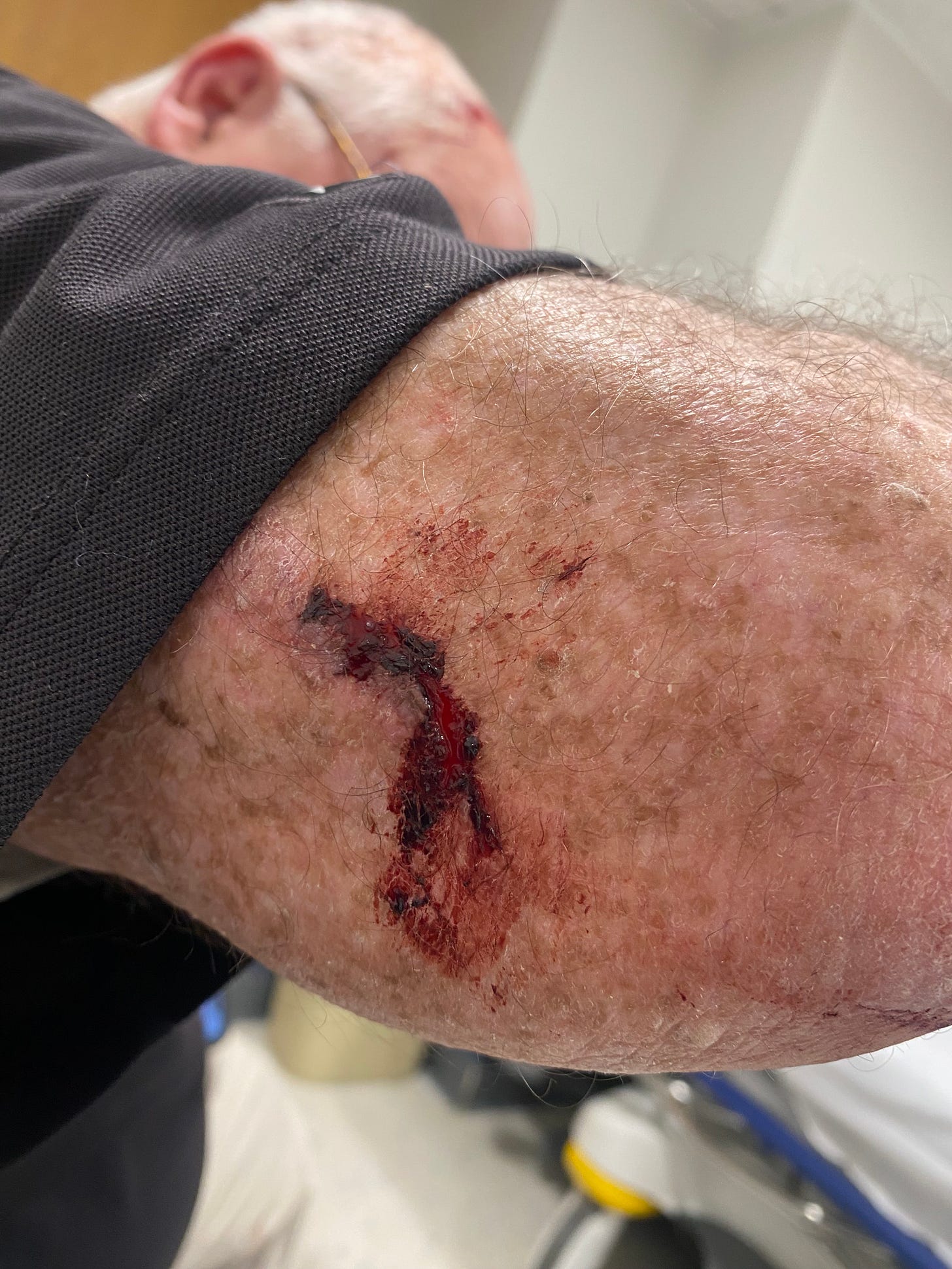
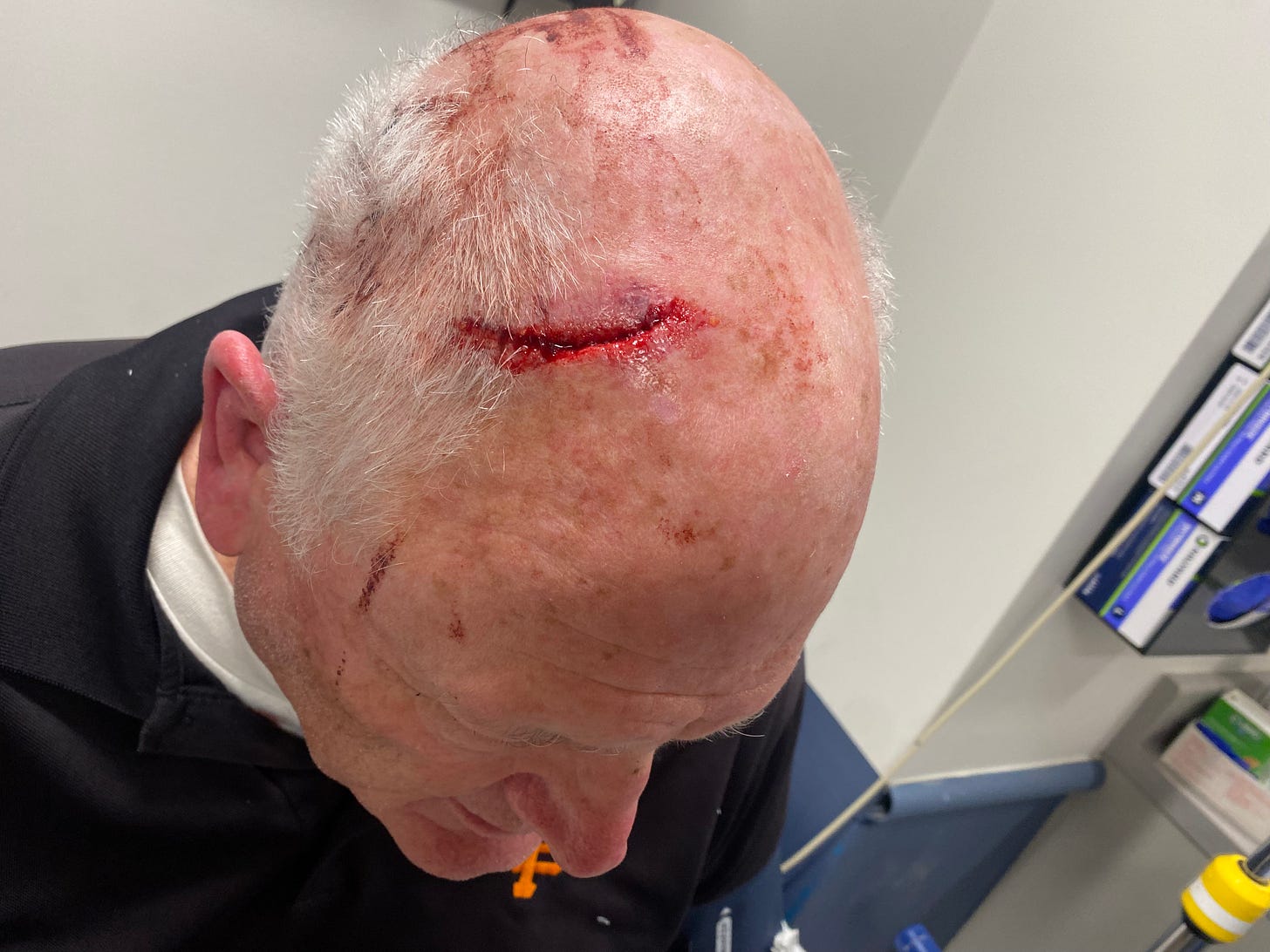
He thought it was plausible that I had fractured my skull. The ambulance drove to the ER with lights and sirens where I was evaluated in triage, then with a CT Scan, and, after determining that there were no fractures or anatomic problems in my head and neck, my wounds were sutured and bandaged. I was released from the ER with a warning that I probably had a concussion.
My sister had sent her husband to the airport and she stayed with me, drove my car with us in it to a hotel, and has rearranged her schedule to drive me all the way to my home in Salt Lake City. (No one is as blessed with a loving sister more than am I.)
Here are my observations about this experience:
1) There is no better motivation for patient care than altruism. Humans are social animals. We have built in empathy for other people. We want to help. Yes, of course, there are countervailing unkind urges in many members of our species, but the general rule still stands. The passerby who stood with me and helped me for a good portion of an hour without ever thinking of himself is a small example of this inbred altruism characteristic of people. Altruistic care puts the focus of the care on the patient, the one who needs help. People who are trained health professionals, of course, need compensation for their professional efforts, but that does not mean that they can’t be altruistic. Professional ethics in medicine and nursing traditionally require the health professional to place the needs of the patient before their own interests. Optimal health care honors that tradition, supports it, expects it. Unfortunately, the American health care system is hellbent on eliminating altruism and replacing it with greed and profiteering. No health care system can both maximize profits and optimize patient care. Those are mutually exclusive aims. Let us resolve to rescue altruism and charity as chief motivations in medicine.
2) Competition has no place in the care of patients. Cooperation is what supports the best in care. No matter who initiates a call for emergency services, the best and most efficient way to render those services on the street of Chicago, or anywhere else, is for the community to establish the norm of cooperation among providers so that only one ambulance is sent, and only one hospital (the best one for the needs of the patients) is designated to receive the patient. Lying on the street in Chicago bleeding profusely from a scalp wound, I was in no way a shopper for health care. As trained in medicine as I am, I would have been totally unable to manage any kind of effort to consider competing offers for rendering my care from competing providers. Patients have no idea whether the service they are receiving is up to standard and prices are irrelevant to the man suffering in the street. Let’s resolve to stop the pretense that market forces and competition will improve quality and lower prices in health care.
3) There I was in the middle of a Chicago neighborhood, where I knew no one, and had no idea about what health care services were available. I was injured, potentially seriously (though thankfully that didn’t turn out to be the case) and yet I was not anxious. Why? I am old enough to be on Medicare, and have been wise enough not to join a Medicare Advantage plan. I have a supplemental plan along with Medicare. Traditional Medicare, like I have, does not limit me to specified networks of doctors and hospitals. I choose where I get care and know that the bills will be paid by Medicare and my supplemental insurer. That is good governance at work. The paramedic who tended to me on the street was a Chicago fireman. He knew his business, started an IV handily, checked my vitals and glucose, saw to my comfort, covered my wounds. Again, good governance at work. The hospital where I received care is in the private sector, but of course regulated by government. The nurses and doctors I saw at the hospital are privately employed, but also licensed by government. Good governance again. I was able to face my situation sitting on the street in Chicago because it is still true in the US that public funding for privately delivered health care, the norm in the US for 3/4 of a century, all overseen by good governance, provides great health care value. Markets don’t magically make anything happen in health care. Our pretense in the US that market forces are at work in health care is eroding the value of our traditional system-public funding for private care overseen by government. Markets (or more correctly the pretense thereof) steal the margin needed to make medicine happen. Let’s resolve to eliminate the private corporations that are stealing our public funds for health care and reform our health system so that better, simpler care can be fairly financed for all.
I have seen the American health care system from many different perspectives: as a patient, a primary care doctor, a specialist, a public health leader, a regulator, an academic physician. I have been in health care for four decades and have seen the erosion of care quality and access happening while the cost is skyrocketing. We Americans pay more for health care than does any other citizenry, including more taxes to support health care. Yet we receive mediocre care compared to other peer wealthy countries. People die in the US because they can’t afford treatments that would have saved their lives. Families are bankrupted by health care costs, an economic occurrence that never happens elsewhere in the developed world. Learn more about these problems by reading my books or watching the film I produced (find them at View source at uathcares.health). While you are visiting the website, learn more about our proposal to change how we do health care business.
During the current political year, stop donating to the politicians and parties that are ruining our health care system. Take the disposaable funds you have and instead donate them to the Utah Cares PIC (on the website) so that we can mount the campaign needed to put the care of patients on the ballot.
Some day you might be sitting in the middle of a street needing care. Will you have peace of mind about your health care financing? Will you feel secure about the quality of care that you will receive? Will you be priced out of needed care?
Thank you for your support of the Utah Cares Political Issue Committee.
Dr. Joseph Q. Jarvis is a public health physician, chair of the Utah Cares Political Issue Committee and author of several books, including The Purple World: Healing the Harm in American Health Care and What the Single Eye Sees: Faith, Hope, Charity, and the Pursuit of Discipleship.