



By Joseph Q. Jarvis | Published: 30 August 2026
The care of the sick and injured is valued by every religion, belief system, or ethical standard that I know of. This appears to be a universally human trait, perhaps inborn, that we accept as a standard for our individual and group behavior that our fellow human beings, when unwell, deserve our time and attention; we should care about members of our species. In this essay, I am going to point out the call to care as I see it articulated in the writings which are sacred to members of my religious group, the Church of Jesus Christ of Latter-day Saints. I do that for several reasons. First, these are the scriptures and teachings that I know best and can therefore more authoritatively represent to my readers. Second, I am leading the effort to organize a campaign to universalize the care of the sick and injured in Utah, where my church remains an important part of the social fabric and wish to motivate my fellow Latter-day Saints to join in this effort. Third, I would like to grow the movement for universalizing healthcare beyond Utah into the entire Intermountain West, including into Idaho, Montana, Wyoming, Nevada, and Arizona, where substantial populations of Latter-day Saints live. These states are the home of many patients who find their way to Salt Lake City for tertiary or higher level care so reforming health systems throughout this region will have a major positive impact on healthcare in Utah. And finally, Latter-day Saints embrace the Bible as scripture and of course share that with all people in the broader Judeo-Christian tradition. Thus, many of the LDS teachings about the need to care for all of our brothers and sisters in the family of God will be recognizable to other Bible reading people.
By focusing my essay on LDS teachings specifically and Judeo-Christian principles generally I do not at all cast aspersions on the teachings of other religions and belief systems, nor wish to denigrate adherents of all other ethical patterns. My message is that we all should be working towards systems of health care that make better, simpler care financed fairly for all the norm wherever we live and whatever we believe, because that is a best practice for individual and group living.
As its name clearly states, the Church of Jesus Christ of Latter-day Saints identifies Jesus of Nazareth as the central figure of its teachings and the source of its authority. He is, for me and my fellow LDS believers, the pre-eminent Person (or Son of Man) of human history, the Example for how to live a blessed life, the master Teacher, the Creator of the earth where we find ourselves in this life, and the Hope for meaningful life beyond our present existence. Two thousand years ago He announced the establishment of His Kingdom on earth and produced evidence that He was the Messiah that the House of Israel had been taught to anticipate by performing remarkable acts of healing, including raising the dead, and ultimately rising Himself from death. Written into the record of His life and ministry (now known as the Gospels in the New Testament) is evidence that in fact He did heal the sick and injured. Apparently His opponents essentially acknowledged that He performed these miracles by making the claim that He did so not with God’s power, but with the power of the Devil. These perverse claims were supposed to be embarrassing to Him, and cause Him to shun the limelight, but He and HIs friends simply reiterated the opposing criticism of His miracles and asked the people at large to judge for themselves whether His miracles were good (came from God) or evil (came from satanic sources). He became widely known for His healing power. People came from all over Galilee, Judea, and neighboring areas to ask Him for healing and He gave freely of this power. Right up to the last hours of His life He healed, including restoring the ear of a soldier who came to arrest Him before His crucifixion. Jesus, as a resurrected Being, appears in the Book of Mormon where He likewise invites all with physical ailments to come to Him and be healed. Latter-day Saints (and other Christians) must, I think, acknowledge that Jesus cares about health care. That being the case, we should care about it, too, and be sure to organize society so that healing is offered to all.
To underscore this point, consider what Matthew records as the final public teaching that Jesus made. This teaching, like many of his precepts, came in the form of a parable, this time about dividing sheep from goats (Matthew 25:31-46). Unlike most of His parables, which are directed to individual listeners, this teaching addresses the behavior of nations, which the Son of Man shall gather before himself after He comes in His glory, in order to separate them (the nations) into those on his right hand (the sheep) and those on His left (the goats). To those on His right He offers an inheritance in HIs kingdom, because they cared for the hungry, thirsty, estranged, unclothed, imprisoned, and SICK. When asked by the right hand nations how they had managed to earn this blessing, the Son of Man said: “Inasmuch as ye have done it unto one of the least of these my brethren, ye have done it unto me.” On the left hand there was no blessing, only a curse with an order to ‘depart into everlasting fire’ because of failure to care for those in need. The final summary statement avers that the goat nations, on the left hand, shall go away into everlasting punishment but the sheep or right hand nations into life eternal. So, not just on the individual level, but the group, even national level, if we believe in Jesus of Nazareth we should care about arranging for health care even for the least members of our society.
These teachings about the societal need to care for all were not new to the Jewish nation. Six hundred years before Jesus walked the streets of Jerusalem, two prophets, Jeremiah and Ezekiel, who were eyewitnesses to the demise of the kingdom of Judah at the hand of the Babylonian nation, asserted that a lack of care for the sick and injured led to the societal weakness which made conquest inevitable.
The first of these prophets, Jeremiah, lived and prophesied for 40 years in Jerusalem, relentless in his ministry despite imprisonment and persecution. He said: “The harvest is past, the summer is ended, and we are not saved. For the hurt of the daughter of my people I am hurt; I am black; astonishment hath taken hold on me. Is there no balm in Gilead; is there no physician there? Why then is not the health of the daughter of my people recovered?” (Jeremiah 8:20-22).
Jeremiah knew, as did all of his listeners, that there was a plant in the desert regions around and near the Dead Sea including the area known as Gilead, from which a medicinal balm could be extracted. He is, therefore, asking rhetorically about the whether the balm was available. He knew it was obtainable and he also knew that the governing elites in Jerusalem were making no effort to find a way to use it and other means to care for the sick in the kingdom of Judah.

To emphasize this point, he sarcastically asks whether physicians were not available. Everyone knew that physicians were present, they just weren’t being made available to treat all of the sick. The result was the painful realization that failing to properly care for the sick and injured amongst the population (or, as Jeremiah states it, the daughter of my people) actually caused hurt and anguish to all through the downfall of a weakened society. In essence he says that the people of Judah have hurt themselves and in the end caused their own demise because they did not look to the needs of the sick and injured.
Ezekiel, a generation younger than Jeremiah, was not in Jerusalem when the final battle ended with the razing of the temple of Solomon and the burning of the city. He had been taken prisoner to Babylon during an earlier of siege of Jerusalem by the King Nebuchadnezzar. In Babylon he received his call to prophesy to the captured nation of Judah. Among the themes he developed as the spokesperson of God was the following: “Woe be to the shepherds of Israel that do feed themselves! Should not the shepherds feed the flocks? Ye eat the fat, and ye clothe you with the wool, ye kill them that are fed: but ye feed not the flock. The diseased have ye not strengthened, neither have ye healed that with was sick, neither have ye bound up that with was broken, neither have ye brought again that which was driven away, neither have ye sought that which was lost; but with force and cruelty have ye ruled them.” (Ezekiel 34:2-4). Here again a prophet is teaching that society is only as strong as how it treats its weakest members. A social structure which does not heal the sick and injured, but instead preys upon those in greatest need in order to enrich the elite in society is ripe for destruction because it is weakened from the inside out.
Modern day America needs to relearn these prophetic lessons. The elite in our country are feasting on the illnesses and injuries of our fellow citizens. The care of the sick has become a business opportunity. There is a balm of Gilead in America, and there are physicians available, but we are failing to deploy them to help those who need care. In the blind pursuit of profit, health insurance is sold that provides no benefit. Medications are manufactured for pennies and sold for hundreds or thousands of dollars and thus priced out of reach of people who die for lack of treatment. Elaborate, expansive, elegant health facilities are erected in urban centers where wealthy people congregate, while vast areas of rural America have no hospital, clinic, or urgent care facility. The obvious harshness of the American health care business model has been angering American patients and their families for several decades now. That anger is playing out in our politics as people are voting for those who best personify vitriol without any reference to actually governing. As a consequence, we have a hollowed out nation no longer strong enough to do its own business at home, and certainly vulnerable, as was Jerusalem in the day of Jeremiah and Ezekiel, to attack from without. This is what Jesus meant when He condemned the nations on His left hand to fiery destruction.
During my tenure as a bishop of an LDS ward in Salt Lake City a few years ago, I was taught that the welfare funds of the church were to be used carefully and only for housing, clothing, food, health care, and other essentials. Among those few needed basics for which I used church welfare funds, not surprisingly the price for health care was particularly onerous. But for LDS bishops in other developed nations, there never are health care costs to be paid. Only in the United States of America, among wealthy nations, will patients be unable to pay for needed health care and either die for the lack of treatment or go bankrupt in an effort to live. Thus, alone among the wealthy nations of the world, we Americans find ourselves on the left hand of God, among the goats. Like Jerusalem 600 years before Christ, we are ripe for destruction, because we have weakened ourselves from the inside through the force and harshness of our for profit healthcare business practices.
If we do not change how we handle health care, the most likely scenario leading to our national destruction will be an economic implosion. Health care costs consume a growing portion of our gross domestic product, now approaching 20% of all expenditures in America. When the Soviet economy was skewed by defense spending at 20% of their GDP in the late 1980s, the wheels came off their economy and they plummeted from first world status into second class standing, where they remain today. Though the American economy is far larger now than the Soviet economy was then, there is no guard rail that will prevent our fall into second class status as a nation if we don’t amend our health care ways and stop the greed which is harshly ignoring our patients.
Health system reform is in our national interest. With the prophets of old I ask, is there no balm in Gilead? Can we not provide physician care for everyone who is sick and injured, even the least of these? Why weaken our nation by the force and harshness of for profit healthcare when doing so places us on the left hand of God?
Please visit the website of the Utah Cares Political Issue Committee to discover what needs to be done and how we can do it. View source at utahcares.health
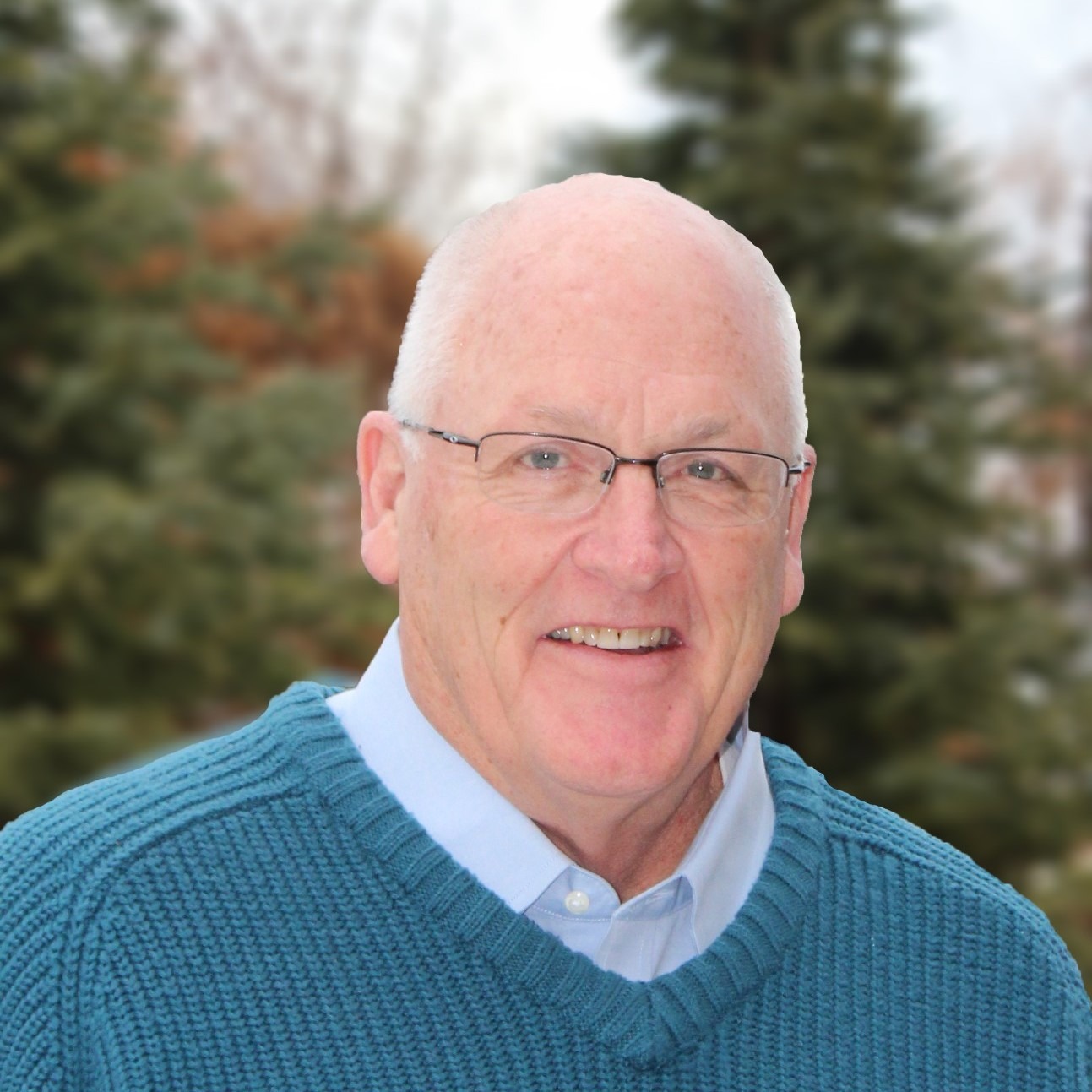
Dr. Joseph Q. Jarvis is a public health physician, chair of the Utah Cares Political Issue Committee and author of several books, including The Purple World: Healing the Harm in American Health Care and What the Single Eye Sees: Faith, Hope, Charity, and the Pursuit of Discipleship.